The Association of German Landscape Architects calls for stronger measures: ensuring climate justice and the quality of open spaces in a more binding manner
The Association of German Landscape Architects welcomes the Federal Ministry of Building’s draft bill on the modernisation of urban development and regional planning law as an important step towards a sustainable planning framework.
One positive development worth highlighting is the strengthening of climate-just and open-space-related considerations in the Building Code:
- in Section 1 through integrated open-space development concepts,
- in Section 1a through climate adaptation, climate protection and near-natural water management,
- in Section 9 through expanded provisions on biodiversity, stormwater management and green roofs and façades.
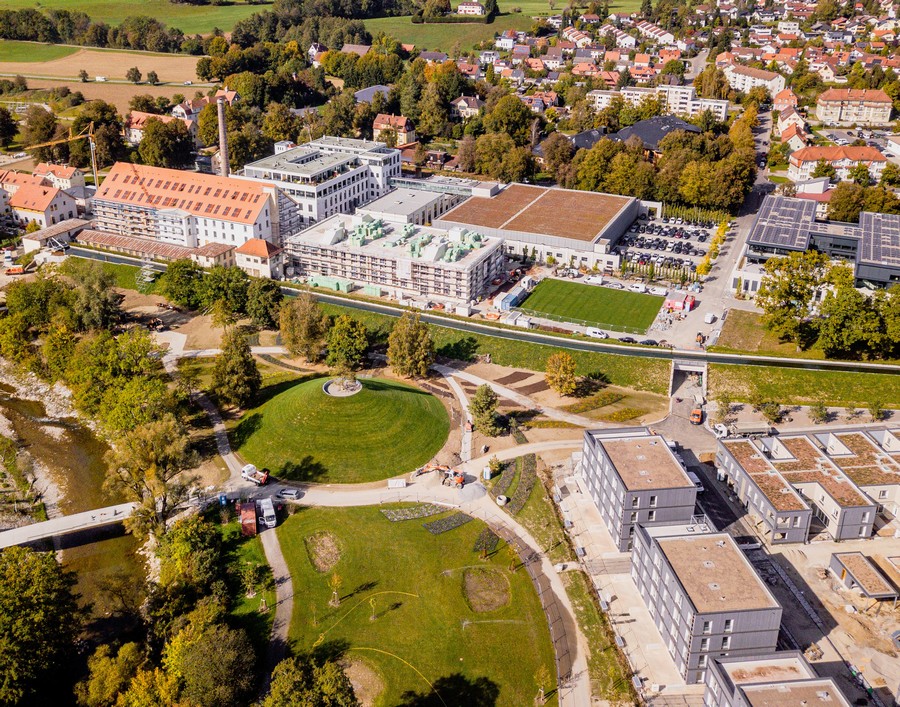
A number of concerns raised by the profession – such as those set out in the ‘Essentials for Climate-Just Urban Planning Legislation’ – are thus incorporated into the draft bill.
At the same time, there is a considerable need for improvement on key points: for instance, binding instruments such as qualified open-space design plans are still lacking, which could ensure that requirements for urban green spaces, rainwater management, biodiversity, quality of life and heat protection are met at an early stage. The Land Use Ordinance also falls short of the requirements for climate-just urban development, as it continues to regulate almost exclusively building density. The bdla has therefore long been campaigning for the introduction of a so-called ‘green space factor’, which would enable minimum standards for greening, infiltration and green-blue infrastructure to be laid down in a binding manner.
The professional association also views with concern the planned expansion of simplified procedures and the higher thresholds for development plans in inner-city regeneration. As a result, environmental assessments would be omitted more frequently in future – with significant negative impacts on soil, open space and the urban climate. There is also still a lack of effective regulations for unplanned inner-city areas under Section 34 of the BauGB, which would enable local authorities to set requirements for soil unsealing, greening and climate adaptation in a legally secure manner.
In addition to clarifying the content, the bdla believes that local authorities also need sufficient financial resources to ensure that the planned measures can be effectively implemented at a local level
The full text of the statement
- Latitude: 0
- Longitude: 0