With Steffi Schüppel, Gwendolyn Kusters, Almut Jirku, Jakob Endemann and Thomas Haas, the German library profession was once again represented at the 37th IFLA Europe Conference and General Assembly in Riga. The event kicked off with a three-day conference programme entitled “Landscape in Transition – Reimagining Resilient Futures”, featuring field trips, lectures and workshops.
- Report from the IFLA Europe Conference
The IFLA Europe Conference was hosted by the Latvian association LAAAB. The venue was the magnificent Splendid Palace, a historic cinema in the city centre. The opening ceremony was impressive: Zane Lasmane played the kokle, the traditional Latvian stringed instrument, whilst a film about Latvia’s landscapes played in the background. The welcome address by the Minister for Culture, Nauris Puntulis, underlined the importance the conference holds in the country.
In her keynote speech, Caroline Martin, Secretary of the European Landscape Convention at the Council of Europe, gave a positive assessment of the Convention, whilst also pointing out that Germany – alongside Austria, Liechtenstein and Monaco – has still not ratified it. She also presented the newly expanded Register of Damage for Ukraine, in which damage to parks and gardens can also be documented in future.
Tim Waterman, Professor of Landscape Theory at Bartlett UCL, called for an anti-disciplinary planning culture that transcends professional silos, for landscape to be seen as a process rather than a product, and for flatter hierarchies in project work. In the face of uncertain futures, he called for developing new questions rather than relying on hasty answers. Marina Cervera reported on the award-winning ‘Green Axes and Squares’ project in Barcelona’s Eixample district – including the surprising twist that, although opponents of the project were vindicated in court, they ultimately decided against dismantling it in view of the visible positive effects.
The sessions also provided plenty of food for thought: Attila Tóth from Slovakia presented a project that draws on a site’s historical traces and argued for a conscious approach to memory in landscape architecture – “the next layer is ours to design”; memory, he said, is not the end point of conservation, but the foundation for future transformation. Jürgen Furchtlehner from Austria presented, under the title ‘Rethinking Streets in Vienna’, the study ‘Green Space Equity for a Resilient City – Visionary Realities’ (BOKU Vienna and AK Vienna, commissioned by the Vienna Chamber of Labour, 2023), which sets out recommendations for a fairer distribution and improved accessibility of green spaces in Vienna. Varpu Mikola, the Finnish co-founder of Nomaji, explained the ‘Alku’ approach developed by her own practice, which conceives child-friendly landscape architecture and urban planning based on the principles of contact with nature, physical activity and everyday learning. The Latvian practice ALPS presented the redesign of the Riga Psychiatry and Narcology Centre, where positive effects for patients were already being observed during the implementation phase – one of the excursions led directly there, as well as to a historic military cemetery.
The IFLA Europe Award went to Landezine. A panel discussion featuring representatives from Landezine, the Barcelona Landscape Biennial, JoLA and other publications explored how the media coverage of landscape architecture is changing.
The conference in Riga showcased landscape architecture in a state of transition – between making amends for historical destruction, disciplinary openness and the courage to defend built utopias in the face of resistance. Whether it was remembrance work in Hungary, green space equity in Vienna or child-friendly urban spaces in Finland: the question of whose needs landscape architecture must take into account – and how this can be translated into concrete design principles – came up strikingly often. For our own practice, the question remains as to how this approach – landscape as a living, evolving system rather than a finished product – can be applied within the tight time and fee constraints of our day-to-day work.
Steffi Schüppel
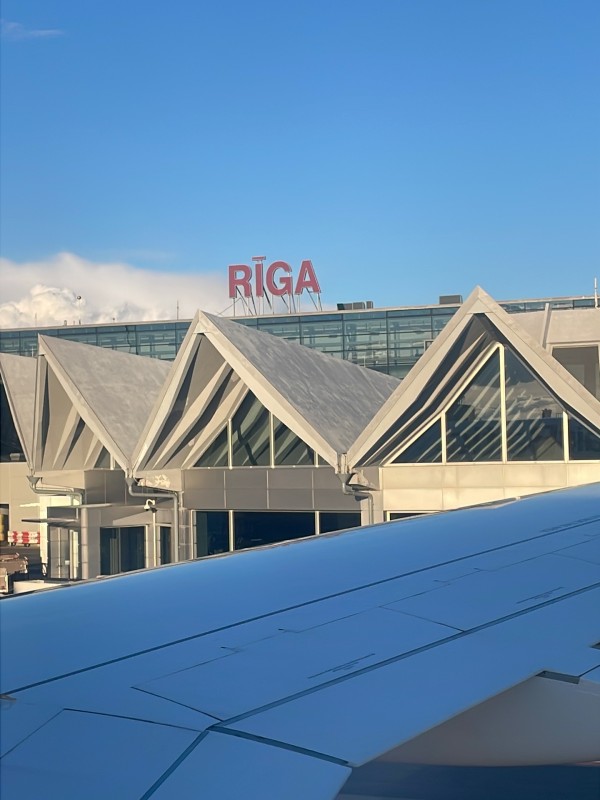
Riga • © Steffi Schüppel
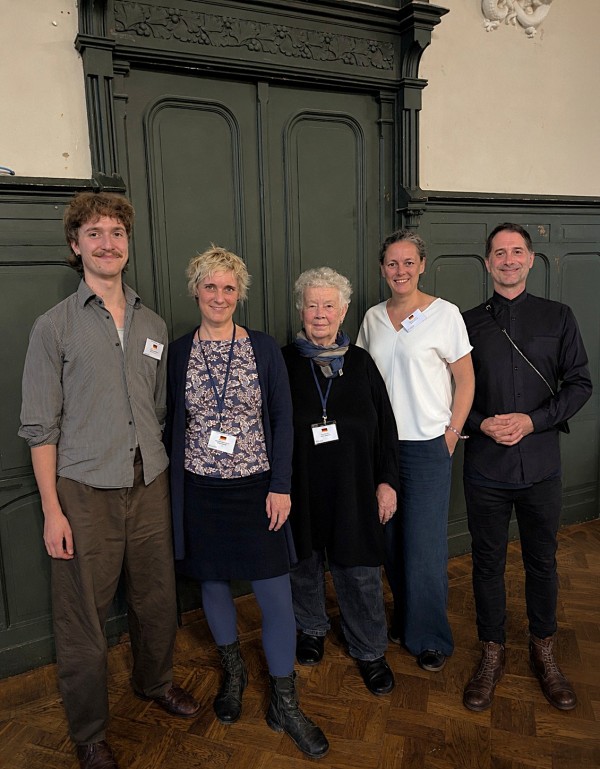
Deutsche Delegation v.l.n.r. Jakob Endemann, Gwendolyn Kusters, Almut Jirku, Steffi Schüppel, Thomas Haas •
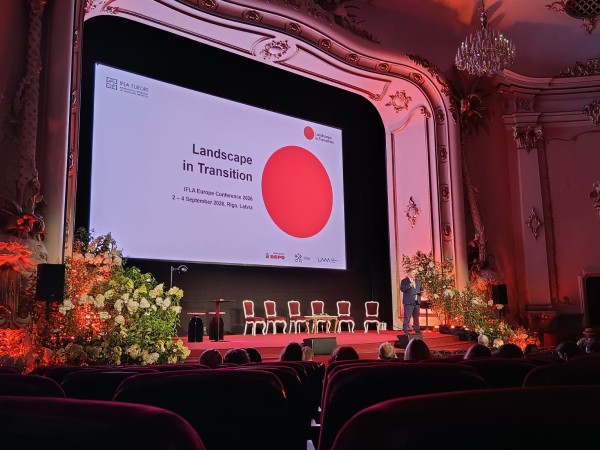
IFLA Europw Konferenz 2026 • © Steffi Schüppel
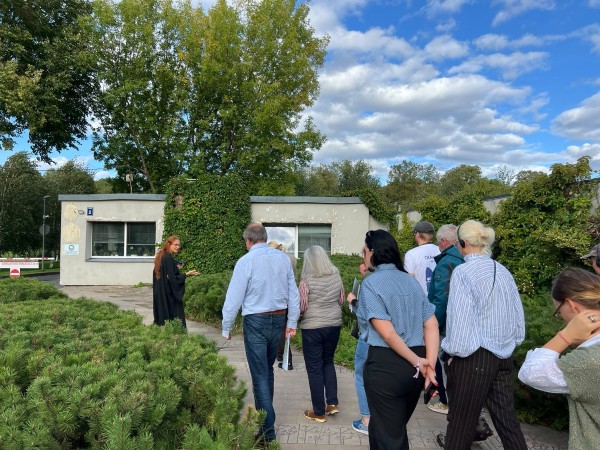
Exkursion IFLA Konferenz • © Steffi Schüppel
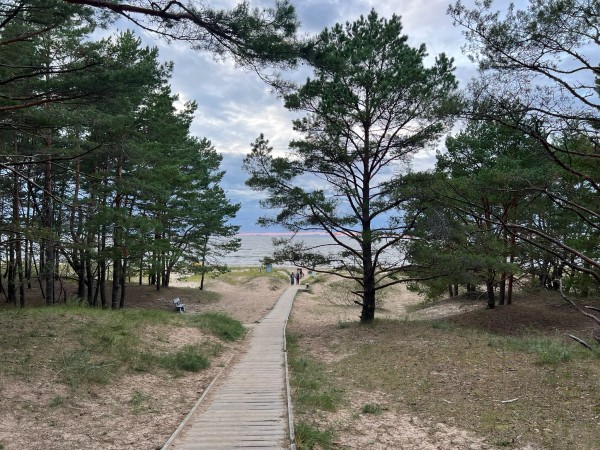
Exkursion IFLA Konferenz • © Steffi Schüppel
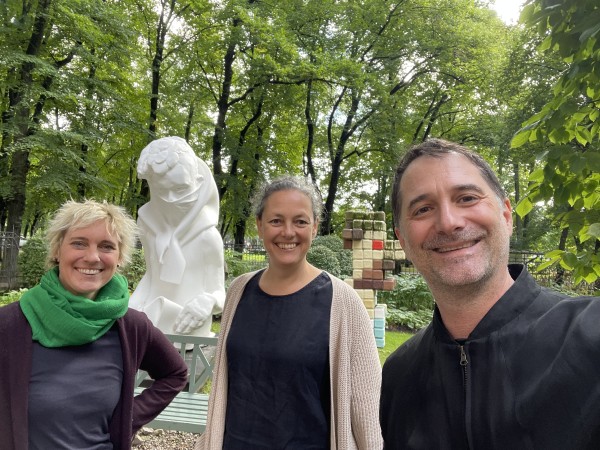
Selfie Gwendolyn Kusters, Steffi Schüppel, Thomas Haas • © Thomas Haas
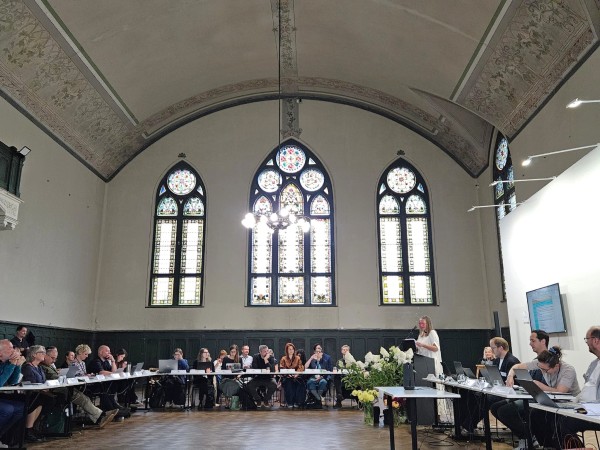
IFLA Europe Generalversammlung 2026 • © Thomas Haas
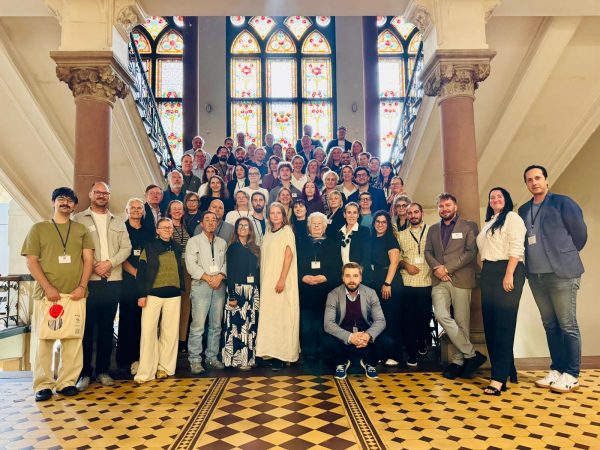
Gruppenbild • © Olga Zvyagintseva
- Report from the IFLA General Assembly
As is traditional, the General Assembly convened following the conference. President Indra Purs welcomed the delegates and reported on current developments within the association. Several landscape architecture organisations, including those from Bosnia and Herzegovina and Albania, have expressed an interest in membership. The Georgian Landscape Architecture Association (AGLAE) was unanimously admitted as a provisional member.
A key focus of the past term of office was on training and the promotion of young professionals. A White Paper on the future of landscape architecture education is to be drawn up by 2031. In this context, cooperation with the European Council of Landscape Architecture Schools (ECLAS), the LE:NOTRE Forum and the European student network ELASA is also to be expanded. A Memorandum of Understanding (MoU) is specifically planned with ELASA for this purpose. Other topics included the recognition of landscape architecture degree programmes and the development of a new website. Financially, the association remains in a sound position and is currently involved in four EU-funded projects.
There is also news on the personnel front: Dovilė Ivanauskienė from Lithuania was elected Treasurer and Hicham Karkouch from Belgium was elected Secretary-General. Long-serving auditor André Colin was awarded honorary membership in recognition of his many years of service. The General Assembly welcomed Caroline Martin, Secretary of the Council of Europe’s Landscape Convention, as a guest speaker. In her presentation, she emphasised the importance of the European Landscape Convention.
Another key focus of this year’s General Assembly on the final day was the exchange between the national professional associations and future cooperation within IFLA Europe. In a learning and exchange session, member associations reported on their experiences in areas including communication, membership engagement, funding, administration, advocacy and competitions. The aim was to learn from one another and to draw on successful approaches for the future work of IFLA Europe.
Building on this, the General Assembly addressed the specific work programme for the coming year during the technical committee deliberations. Existing working groups, projects and tasks were reviewed; new specialist priorities and networks were discussed; and issues relating to the allocation of resources and the budget were addressed. In terms of content, the spectrum ranged from the implementation of the Recovery Regulation in member countries, through the appropriate consideration of rural areas, to professional initiatives and contributions to the New European Bauhaus. Education and training, social media, EU projects and sponsorship were also on the agenda.
Consequently, the focus was particularly on knowledge transfer, networking among national associations, and the joint strategic development of European landscape architecture. The next conference and General Assembly will take place from 22 to 24 October 2027 in Lyon and will be hosted by the French Federation of Landscape Architects (FFP).
Thomas Haas
- Latitude: 0
- Longitude: 0