In February 2026, economic issues took centre stage at the bdla Business Forum and the preceding Young Landscape Architecture workshop. Both events focused on the challenges and future issues facing planning practices.
6th Young Landscape Architecture Workshop
How does a landscape architecture practice grow, and what does growth actually mean? These were the questions addressed at the bdla’s 6th Young Landscape Architecture Workshop on 26 February 2026. The focus was on personal insights into very different practice realities and development paths. Growth was understood not merely as expansion, but as a process of decision-making, structuring and positioning. The discussion also covered phases of stagnation, deliberate self-limitation and the question of what sustains the core of a practice in the long term.
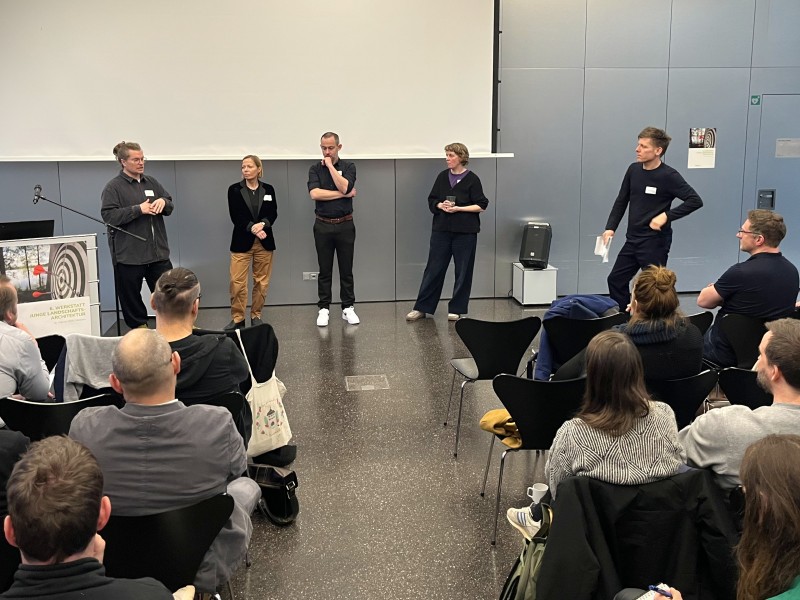
Prof. Laura Vahl (KOKOMO Landschaft und Stadtraum GmbH / Berlin University of Applied Sciences) opened the event. She described the development of her practice in three phases, from its foundation through the establishment of sustainable structures to the expansion of specialist expertise. International experience in Boston and London has significantly shaped her perspective on growth. Michael Wenzel (NUWELA Büro für Städtebau und Landschaftsarchitektur) presented practice development as a process balancing intuition and planning. What began as initial ideas for setting up a practice whilst cycling gradually evolved into reliable structures and increasing professionalisation. Under the motto ‘Want, learn, try’, David Theidel (GREENBOX Landscape Architects Partnership mbB) spoke about joining an already established and successful practice as a partner. The partnership’s joint decision to continue growing entailed strategic considerations, new internal structures and the development of additional business areas. Adopting a deliberately different perspective, Katja Erke (Landschaftsmanufaktur Berlin) described her path to working as a sole trader. Clear professional objectives, a defined working model and deliberate networking form the basis of her independent and sustainability-focused practice.
16th bdla Economic Forum
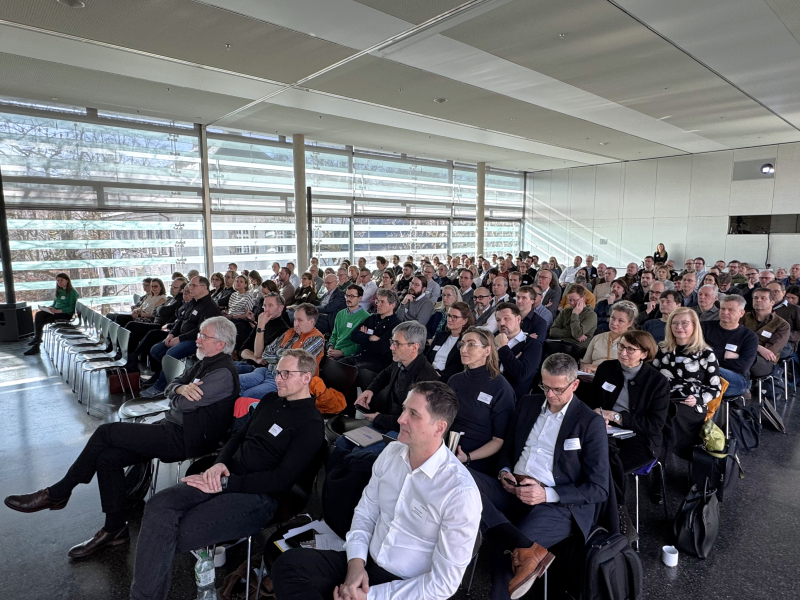
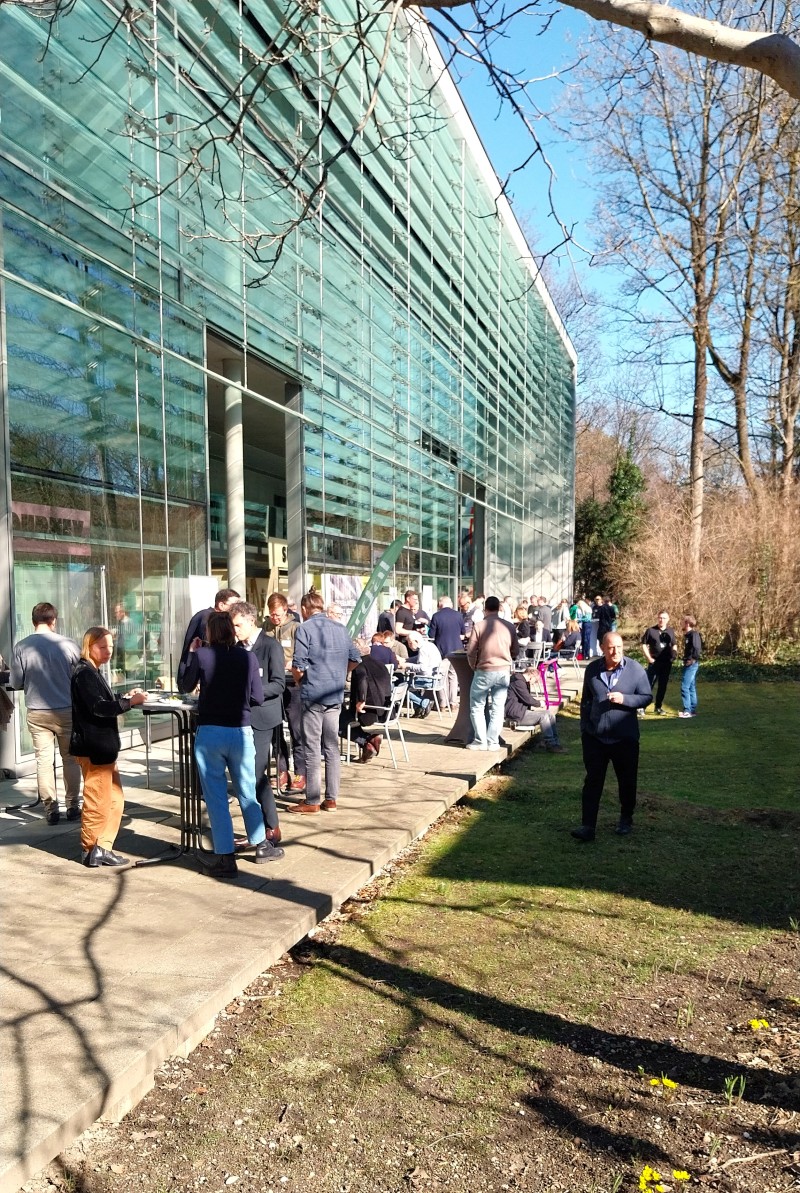
With over 150 participants, the 16th bdla Economic Forum, held on 27 February 2026 in Munich, was once again well attended in glorious sunshine. This time, the focus was on the HOAI, procurement practices and flexible working time models. Following a brief introduction by the designated spokesperson for economic affairs, Markus Pieper, Mirjam Mohrlüder and Dieter Pfrommer presented the findings of the latest HOAI expert reports on outdoor facilities and landscape planning, demonstrating how updated service descriptions, new fee zones and adjusted standard rates can contribute to adequate remuneration. Building on this, Dr Sebastian Schattenfroh expertly examined the legally sound handling of unresolved HOAI issues in practice, drawing on practical examples and court rulings. He emphasised that, since the abolition of binding pricing regulations, it is primarily the fee agreement that determines the terms, and highlighted typical points of contention regarding chargeable costs, project scope definitions and changes to the scope of work.
In the afternoon, Margit Friedrich and Doris Grabner presented the added value of the Bavarian Chamber of Architects’ ‘Vergabekompass’ as a tool for quality-oriented procurement procedures for Chamber members, contracting authorities and project managers. The ‘Vergabekompass’ is also attracting increasing attention nationwide. Following this, Dr Martin Jansen provided an update on the ongoing reforms in public procurement law and their significance for securing public contracts. At the same time, he pointed out that, in future, successful contract acquisition will rely more heavily on actively approaching public contracting authorities, quality in the competition for services and clear compliance structures. Dr Sandra Schuster concluded the session with insights into flexible working time models as a cornerstone for sustainable planning practices. She demonstrated that flexible working time models extend far beyond part-time work or working from home and act as a strategic tool for retaining skilled staff, promoting diversity and fostering innovation within planning practices. This requires a change in office culture, transparent capacity and time tracking, and clear processes, so that flexibility does not lead to self-exploitation but rather to healthy and high-performing teams.
With the kind support of


Media partner

- Latitude: 0
- Longitude: 0