Heritage Conservation in Gardens – Reflections on the Profession
By Prof. Dr Caroline Rolka
The conservation of historic gardens, often referred to as a ‘niche discipline’, is nowadays considered part of modern landscape architecture. Yet, as a conservator of historic gardens, one often faces the accusation of being stuck in the past.
This widespread perception, even within our own professional field, stems from a long tradition of interaction between owners, planners and authorities that is not always straightforward, and which is proving difficult to reverse.

In order to break down mutual misunderstandings, we need a fresh approach to communication, particularly during the crucial decision-making processes, as well as sound and intelligent ideas for implementing heritage-appropriate conservation and maintenance, and bold plans for the further development of historic gardens.
Historic Garden Conservation and Nature Conservation
As a garden heritage conservationist, one sometimes hears that the profession is devoted solely to a purely cultural perspective and, in doing so, turns a blind eye to nature as a biotope.
However, this view repeatedly overlooks the fact that garden heritage conservation has a keen interest in, for example, tending to old trees in a garden as authentic heritage elements and preserving them for the future in their original state for as long as possible.
Prof. Dr Caroline Rolka
And it is precisely these old trees that are, at the same time, extremely valuable tree microhabitats (BMH). These ‘veteran trees’, as old trees are colloquially known, are found with above-average frequency in old gardens, because these gardens – owing to their great age and the more or less continuous care of the tree population – offer these trees the opportunity to survive over the long term due to the continuity of the site.
A study on the occurrence of certain bird species in BMH, using the Ivenacker oaks (Mecklenburg-Western Pomerania) as an example, supports the thesis that old trees represent ‘effective structures for promoting biodiversity in forest ecosystems’ (Sommer, 2024, p. 54). A total of 27 bird species were observed on 15 old trees examined in the listed Ivenack Animal Park as part of the study; the most frequently recorded were the blue tit, great tit, chaffinch, starling and spotted flycatcher.
The heritage features of the ‘Huteeichen’ – oak trees dated to be 1,000 years old – trace their origins back to grazing by pigs from the nearby Cistercian Ivenack Abbey in the 13th century.
In general, this study demonstrated that trees possess high habitat potential, which increases steadily with the age and complexity of the tree.
In general, this study has demonstrated that trees possess a high potential for providing habitats, a potential that increases steadily with the tree’s age and complexity.
As illustrated in the article ‘The Silent Witnesses of Contemporary History’ (Chambers, landschaftsarchitekt;innen 3/2025, p. 12), is due to the generally larger volume of deadwood and frequent defects such as hollows and wounds. “Therefore, they [listed old trees] are potentially of much greater importance for microhabitats and biodiversity than trees in their mature phase.”
Inventory-taking in historic garden conservation
Historic garden conservation is often portrayed as a scientific discipline that focuses on times long past – dating back to the mid-20th century at the latest – whilst failing to take into account more recent trends in landscape architecture.
On the one hand, this is certainly attributable to people’s emotional interpretation of the term ‘old’ as something that no longer falls within their own sphere of experience. On the other hand, this perception is undoubtedly also linked to the fact that it was not until the 1970s that open spaces were explicitly enshrined in the federal states’ heritage protection laws. In the meantime, however, the garden art of post-war modernism has also established itself as a distinct era, as various publications on the subject demonstrate.
Postmodernism, too – which developed around the mid-1970s and continued until the early 1990s – is now also classified as eligible for heritage listing. Consequently, a number of large-scale urban or landscape planning projects from this period are now listed.
These include, for example, the outdoor spaces of the Schlangenbader Straße motorway overpass in Berlin’s Wilmersdorf district, which – designed by Paul-Heinz Gischow and Walter Rossow between 1979 and 1981 – exemplify the new approach to ‘green’ urban development typical of the time.
Another example is the ‘Grüne U’ concept on the Killesberg in Stuttgart, designed by Hans Luz and implemented in 1993, which comprises a network of interconnected parks and woodland areas. These examples are among the most recent monuments in Germany and represent a forward-looking approach to the conservation of the more recent works of landscape architecture.
The aim is to foster acceptance within society for these recent historical artefacts at the earliest possible stage, as many of these sites are at risk of disappearing simply due to a lack of awareness or knowledge.
History of Garden Art
The history of garden art is often told as a European story. This narrative begins with Charlemagne, who is thought to have issued the ‘Capitulare de villis’ in 812 – a decree on royal estates containing a detailed list of herbs that illustrates the species found in late Roman gardens.
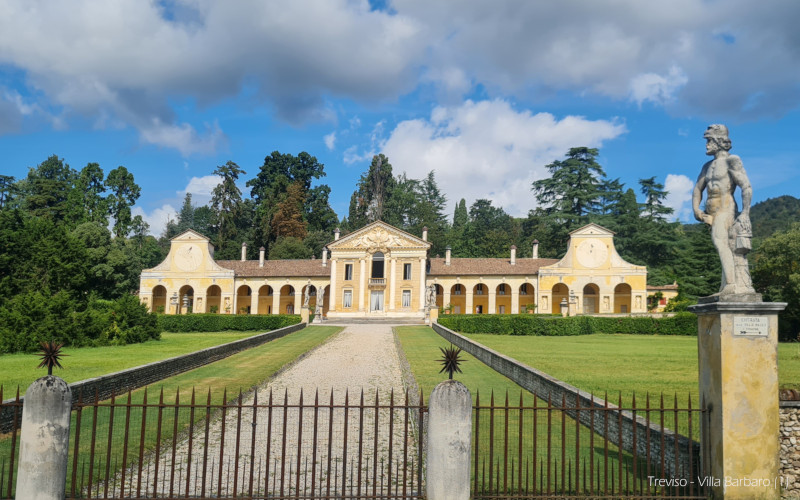
The subsequent ideas in garden design represent further milestones in European cultural history: from the Italian Renaissance, as found in Rome, the Veneto (see picture above) or Florence; the Baroque gardens, modelled on Versailles; the English landscape gardens; the eclectic gardens of the 19th century; and the gardens of the garden reform movement from the early 20th century.
But this perspective, which focuses on European historiography, falls far short! Influences from all over the world have always played an important role in the design of gardens.
Prof. Dr Caroline Rolka
At this point, we should therefore draw attention to the many gardens found within Asian and Oriental cultural spheres. These considerably older gardens have undoubtedly served as models and sources of inspiration for European garden art.
In this respect, it can be concluded that the European garden has, from the very beginning, been a multicultural meeting place. This observation can certainly provide an important impetus for communication in today’s society.
Heritage garden conservation as a professional field
Another point that is repeatedly raised in connection with the profession of garden heritage conservation is the question of who the right practitioners are for this field.
All too often, this is regarded as the preserve of art historians, not least because part of the role involves searching for, sifting through and evaluating historical sources in order to trace the garden’s development. However, it can and must be urgently countered that the conservation of historic gardens is far more than that.
Rather, this planning discipline requires a professional approach to the existing structure through a thorough on-site survey, an assessment of its actual heritage value and, last but not least, creative, heritage-sensitive development within the existing framework. Such planning is based on the principles of the Charters of Venice (1964) and Florence (1981).
Implementing these planning guidelines, agreed at an international level, requires a thoughtful, site-specific design which, without being too ostentatious in its design language, blends into the existing monument and, ideally, enhances its impact. To achieve this, planners must be able to minimise their own desire for self-expression and allow the monument to speak for itself through its historical design.
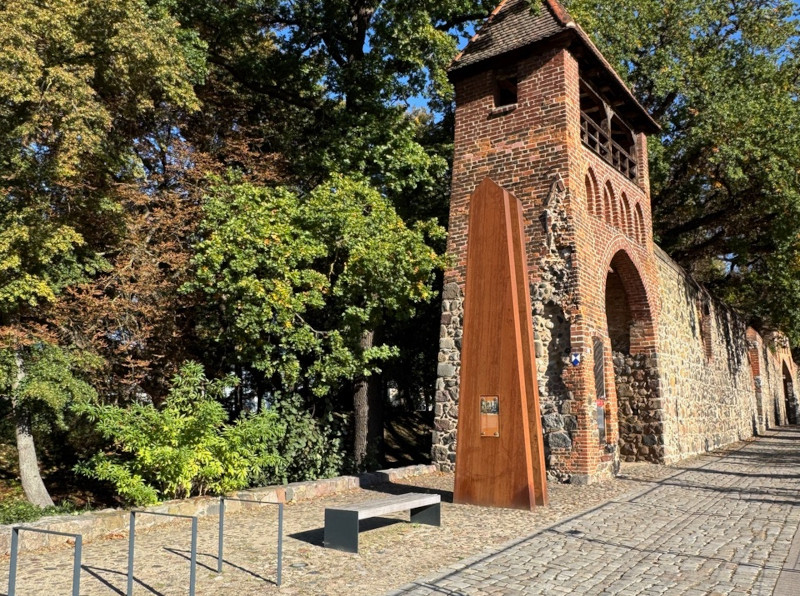
In addition to this requirement for the design, there are many different demands and needs placed on today’s historic green spaces that must be integrated, such as accessibility or contemporary usage requirements (e.g. resource-intensive events or uses not directly related to the monument). In doing so, the limits of materials’ durability and safety must also be taken into account. Furthermore, the issue of the impacts of climate change is playing an increasingly significant role in historic gardens, as evidenced, for example, by the consequences of droughts or heavy rainfall events.
In principle, planning for existing sites must, in addition to complying with heritage conservation principles, go a long way towards meeting contemporary demands for attractiveness, ease of maintenance and durability of use.
Unfortunately, there are far too few qualified training opportunities for this in Germany; only the universities in Dresden, Hanover and Berlin, as well as the universities of applied sciences in Erfurt and Neubrandenburg, still have their own chairs or research staff specialising in the conservation of historic gardens.
In the long term, this scarcity of training opportunities means that the subject, in all its complexity and as a forward-looking planning discipline, is being increasingly lost.
The situation is no better at the lower levels of heritage protection authorities. Very few of these licensing authorities have trained garden heritage conservationists on their staff, except perhaps for a handful in the major cities.
In this context, those responsible in the ministries of culture should bear in mind, in view of existing and forthcoming job cuts, that garden heritage conservation is an essential safeguard for the future, which has long since embraced all the key concepts in our current approach to the environment – garden heritage conservation is sustainable, resource-efficient, biodiverse, ecological, promotes communication and is also multicultural.
Bibliography:
- Sommer, R., Schneider, J., Erzinger, P.: Tree microhabitats and bird fauna in the ‘Ivenacker Eichen’ pasture woodland, in: Forest Ecology, Landscape Research and Nature Conservation, Issue 2022/24.
Further information on this topic
Author: Prof. Dr Caroline Rolka, landscape architect (bdla), Department of History of Garden Art and Garden Heritage Conservation, Neubrandenburg University of Applied Sciences, bdla specialist spokesperson for garden heritage conservation. The text appeared in the bdla association journal “Landschaftsarchitekt:innen” 4/2025.
- Latitude: 0
- Longitude: 0