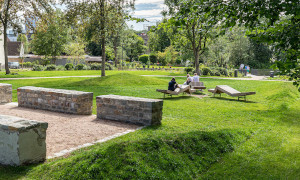
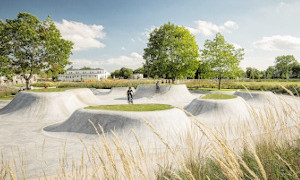
Liveable, climate-resilient cities do not emerge of their own accord – they require a reliable political framework. At the ‘Initiative Grün’ parliamentary breakfast on 17 December 2025, the BGL, BdB, bdla and ZVG jointly made it clear to Members of the Bundestag what is needed now: climate-just urban development, long-term support for urban green spaces, tailored research and university education, and a consistent reduction in red tape.
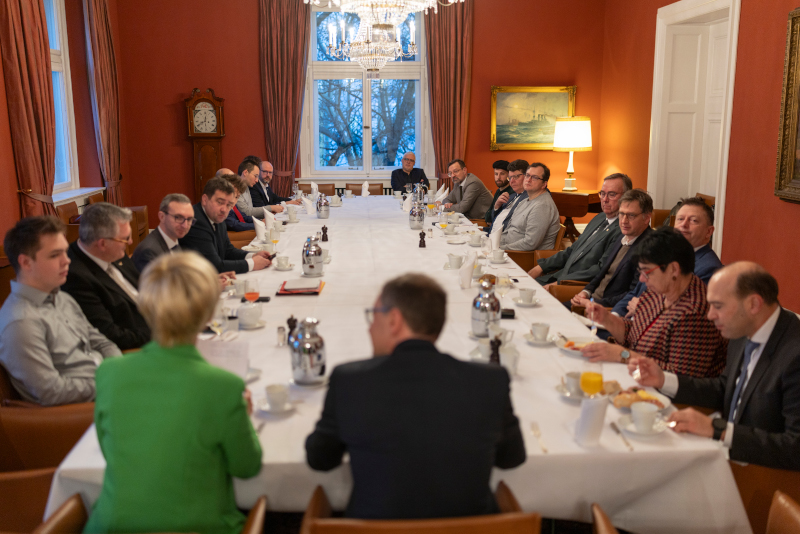
The urgent need for action was particularly evident in relation to climate-friendly urban development and the amendment to the Building Code (BauGB).
Public pressure is mounting – as demonstrated by the ‘Baumentscheid’ and Berlin’s Tree Protection Act – which is why parks, green spaces and transport corridors must be designed to a high standard. If we create enough space for trees and water infiltration, both the climate and the cityscape will benefit equally – this is how we create liveable, attractive cities that inspire people.
Timo Herrmann
bdla Vice-President
During the meeting, the bdla also arranged further discussions with Members of Parliament for 2026.
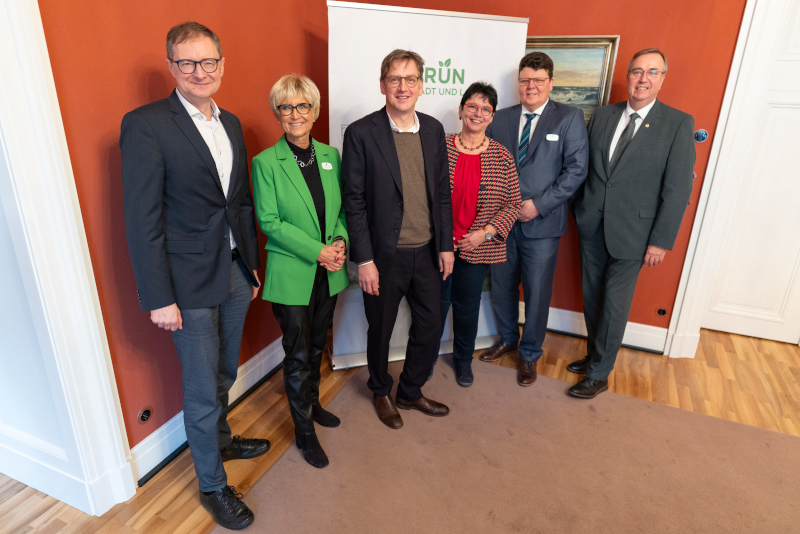
The role of the federal government was also highlighted. BGL President Thomas Banzhaf said: “Green initiatives must play a central role in the implementation of the infrastructure packages. Furthermore, enshrining climate adaptation as a joint responsibility in the Basic Law creates a reliable foundation for local authorities.”
ZVG President Eva Kähler-Theuerkauf highlighted the importance of research: “Plants are key to liveable, climate-resilient cities – but their potential can only be realised through the correct use of suitable varieties.”
The four associations spoke out strongly in favour of maintaining and expanding university-based research and training. And BdB President Hajo Hinrichs spoke out clearly on the current situation: “Whether it be competition law, funding programmes or nature conservation requirements – in many areas, bureaucracy today prevents urban green spaces from being used effectively. If the benefits of plants can no longer be legally recognised, tried-and-tested trees and shrubs are excluded from funding programmes, and local authorities can barely find suitable species, then something is fundamentally wrong. Climate adaptation requires less ideology and significantly more practical expertise. The legislature must now critically review existing regulations and finally implement the promised reduction in red tape.”
Conclusion: Climate adaptation in cities can only succeed with robust urban green spaces, local authorities capable of taking action, and bold political decisions – now.
- Latitude: 0
- Longitude: 0