The bdla’s position on the use of allergen-related plants in urban green spaces.
Climate change is fundamentally altering the conditions for urban greening. Milder winters, longer growing seasons and increased CO₂ concentrations mean that plants flower earlier and for longer, and in some cases produce more pollen. For people with allergies, this means a noticeable increase in symptoms. It is understandable that local authorities wish to respond to this, and the topic of allergy-friendly urban design is consequently gaining greater professional significance.
The bdla shares the concern that the wellbeing of all city dwellers should be taken seriously. However, a trend that is increasingly being observed gives cause for concern: in many places, the desire for low-allergen cities is leading to a blanket reduction in plant diversity. Local authority planting lists are being cut back, and entire species are being removed without sufficient, scientifically sound justification. The bdla opposes this – not because allergy exposure is not a real problem, but because exclusion lists are not the solution.
Allergy risk is not a characteristic of a species, but of a context
A plant’s allergenic potential does not depend solely on the species, but largely on site conditions and vitality. Water supply, heat stress, air pollution, maintenance status and age all influence how much pollen a plant produces and how aggressively it does so. Stressed plants can develop increased allergenic potential, regardless of their species. Blanket bans on certain species ignore this complexity and suggest a level of safety that is not scientifically substantiated. Furthermore, pollen is highly mobile. It does not stop at city boundaries, and local planting bans cannot prevent its spread.
Monocultures weaken resilience and increase risk
. Urban greenery with low species diversity creates ecologically unstable monocultures that are more vulnerable to pests, diseases and extreme weather events. Large stands of plants that flower simultaneously also create local peaks in pollen concentration, which mixed plantings do not produce. Climate-adapted urban greenery requires diversity in species, age classes and life forms so that flowering times are staggered, pollen loads are spatially distributed and the risk of failure is minimised.
Biodiversity is health infrastructure
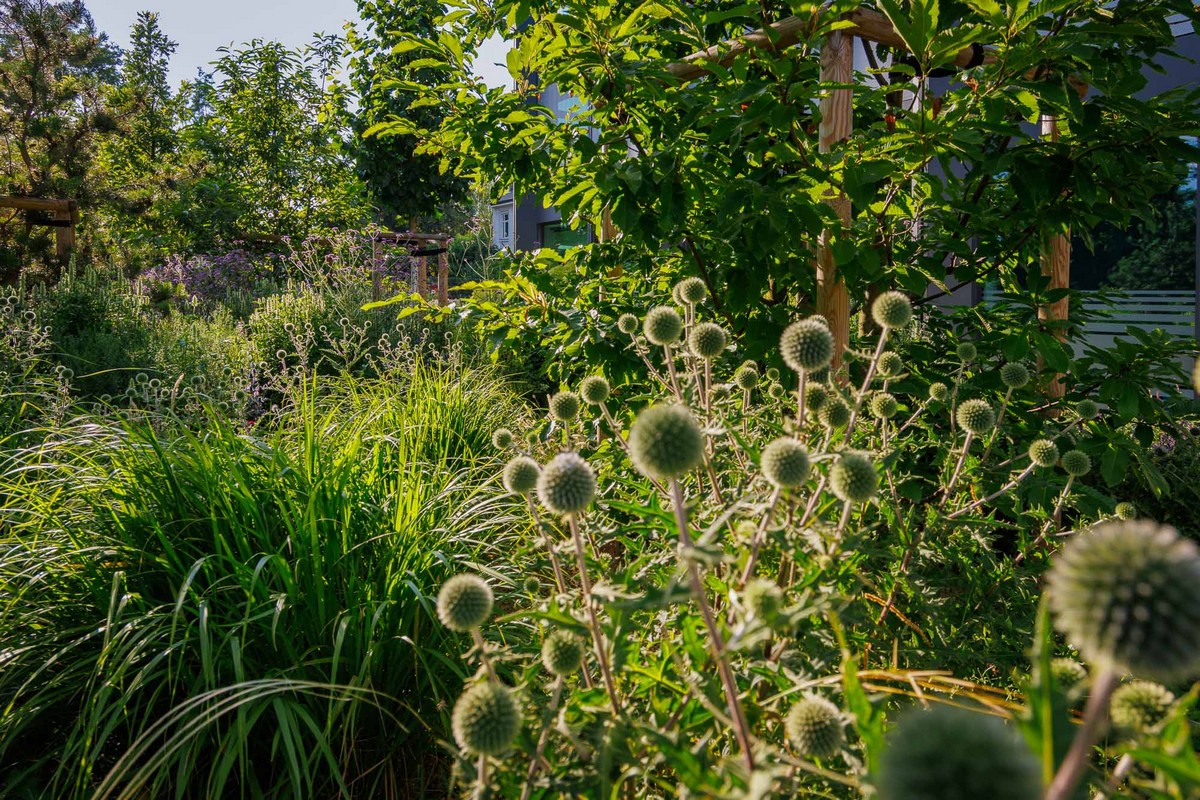
Recent research in the fields of environmental science and the microbiome significantly broadens the picture: contact with diverse natural environments has a positive effect on the human immune system. Studies show that biological diversity in the immediate living environment promotes microbial diversity within the human body, which is regarded as an important protective factor against allergies and autoimmune diseases. These links are now so well established that the term ‘biodiversity hypothesis’ is used. The decline in natural diversity in cities is reflected in an impoverishment of the human microbiome. A study carried out in Finnish nurseries illustrates this clearly. Children who regularly played in outdoor spaces designed to be close to nature developed more diverse microbiomes and measurably improved immune markers within a short period of time. The loss of plant diversity is therefore not only an ecological issue, but increasingly a health issue as well.
More greenery means less overall pollution
Scientific evidence clearly shows that diverse urban vegetation reduces heat stress and ambient temperatures, binds particulate matter and air pollutants, improves the microclimate and indirectly regulates inflammatory and allergic processes. On balance, urban greenery provides far greater protection than the burden it imposes through pollen. Anyone who reduces green spaces for the sake of allergy protection is worsening the overall health situation of the urban population.
Allergy-friendly planning requires specialist expertise and high-quality plant lists
It is both possible and necessary to take allergy considerations into account professionally in green space planning. However, this is not achieved by excluding entire species, but through well-thought-out planting concepts and the judicious use of plants: site-appropriate species mixes, the preferential use of insect-pollinated varieties, and expert vegetation management. This nuanced approach is the responsibility of planning and implementation specialists, and this is precisely why they need comprehensive, high-quality plant lists.
Conclusion
: Blanket planting bans do not solve allergy problems. They fail to recognise that allergy risk is context-dependent, that monocultures concentrate rather than disperse pollen loads, and that biodiversity strengthens and simultaneously protects the human immune system. Urban greenery is not a burden to be minimised, but rather a health infrastructure that must be planned and maintained in a manner appropriate to its location.
The bdla recommends:
- refraining from blanket exclusion lists and developing and updating local authority planting lists in a professional manner;
- to actively preserve, promote and expand biodiversity in urban green spaces;
- to ensure the site-appropriate use of plants and qualified vegetation management;
and- to integrate urban planning, healthcare and climate adaptation across different departments.
- Latitude: 0
- Longitude: 0