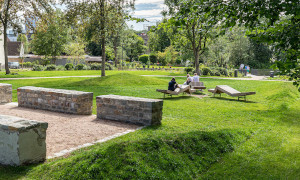
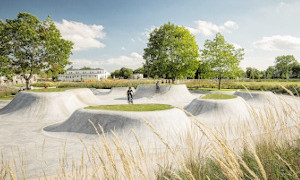
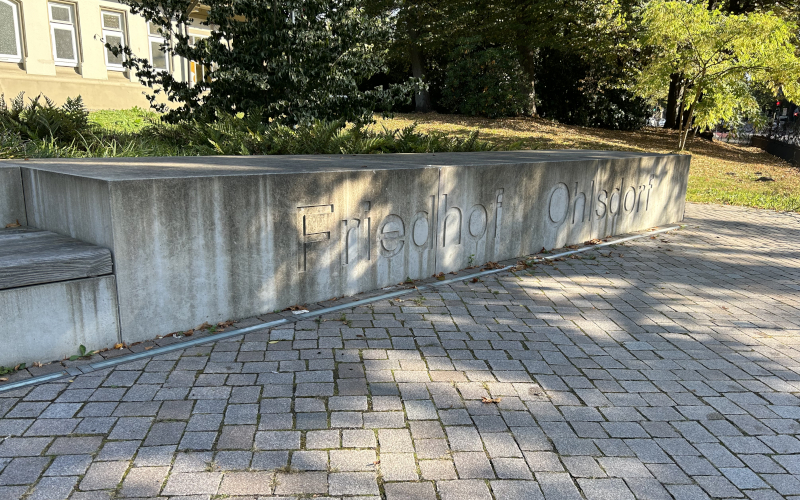
“From Necropolis to Vibrant City” – Bart Brands (Karres & Brands) chose a very apt title for this year’s Grüntöne in Hamburg in his introductory talk. This year, the ‘Grüntöne’ event visited Ohlsdorf Cemetery, which faces many changes in the future due to shifts in burial practices and demographics. An urban development and sustainability strategy has been drawn up, the first measures of which are now visible at the cemetery.
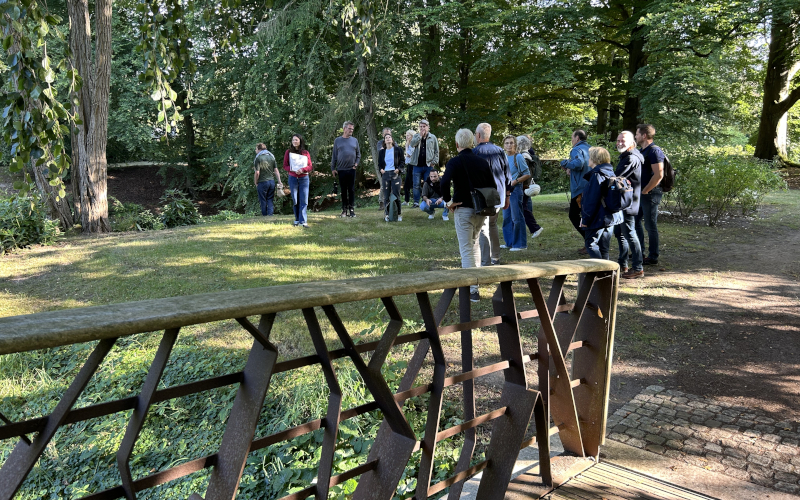
Together with Jessica Uhrig from the practice Ando Yoo Landscape Architecture, Bart Brands and Marc Templin, a landscape architect and deputy cemetery manager, planning principles and development prospects were first explained in terms of planning theory through introductory talks, before the success of their implementation was discussed at a number of locations during a detailed walking tour.
The group’s first stop was at the so-called ‘railway entrance’ opposite the Ohlsdorf S-Bahn station, situated not far from the actual main entrance. The fact that heritage conservation considerations sometimes conflict with accessibility requirements also became clear along the main entrance, where various options for barrier-free access had been envisaged but were not implemented for heritage conservation reasons. Another challenge for Karres & Brands was the issue of visitor guidance: how can visitors arriving at Ohlsdorf S-Bahn station be intuitively guided past the smaller side entrance building to the main building, which lies hidden behind it?
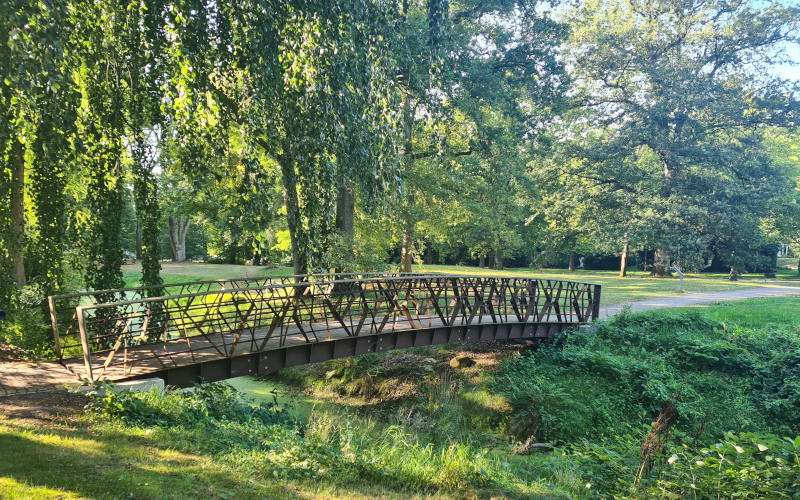
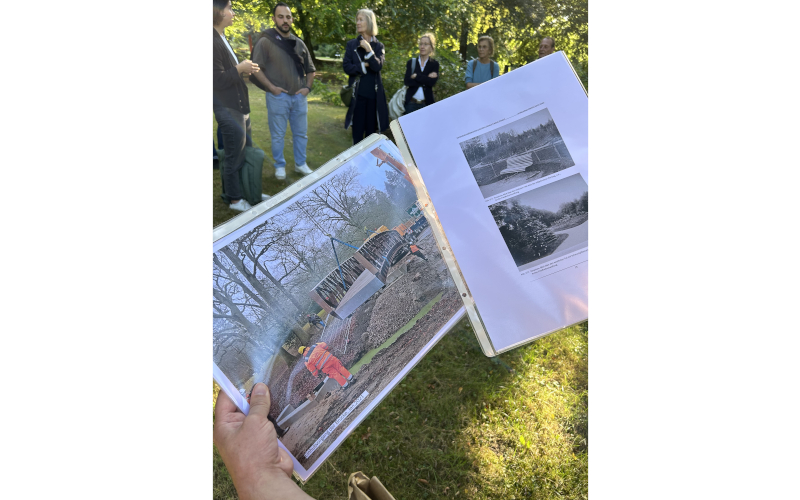
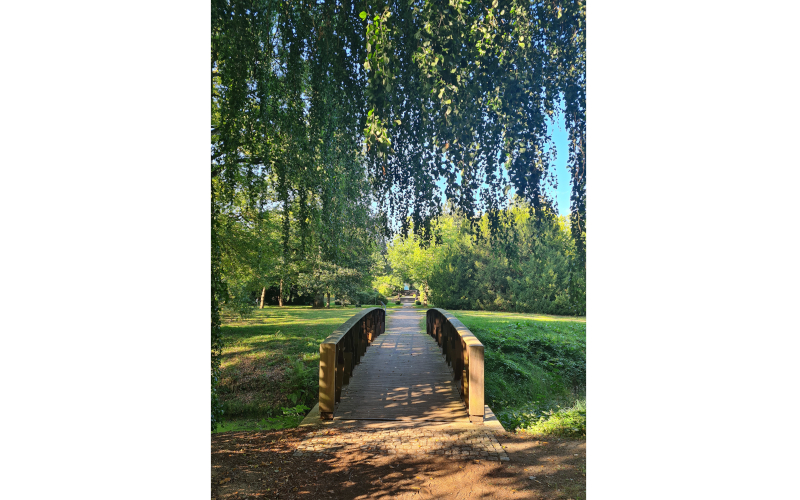
Another measure arising from the ‘Sustainability and Development Concept 2050’ is the rediscovery and restoration of access to the Südteich island. The firm Ando Yoo Landscape Architecture is responsible for this project and was represented on the day by project manager Jessica Uhrig. The island had been inaccessible until 2021, but its potential was to be realised. An expert report, including mapping, formed the basis for Ando Yoo’s design, which centred on a new bridge and additional new recreational areas on the island. This new bridge re-establishes the historic visual connection to the Cordes Fountain.
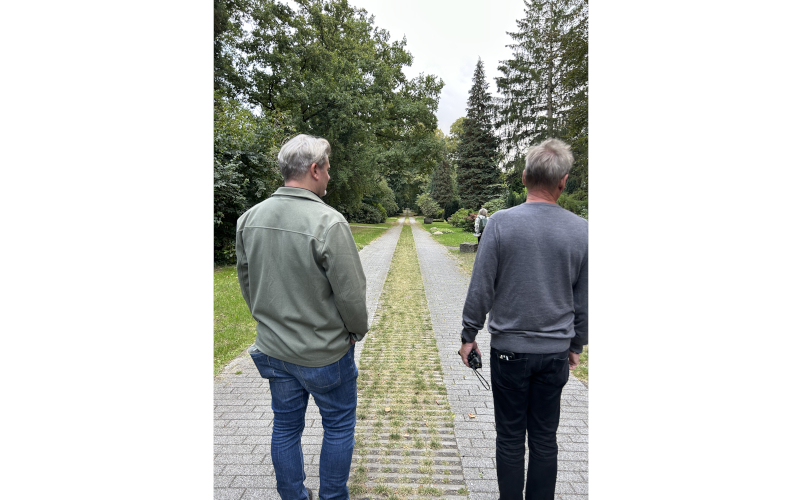
Visual connections were also the focus of the final thematic area: the cemetery’s path axes, illustrated by the example of the so-called southern axis. Along these axes, trees were ‘ruthlessly’ thinned out, as Bart Brands put it, so that path connections and sightlines could once again be seen and experienced. This measure has brought light into the cemetery’s spaces whilst simultaneously strengthening key junctions. Furthermore, it has opened up the cemetery towards the Green Belt of the Hanseatic City of Hamburg and the neighbouring school.
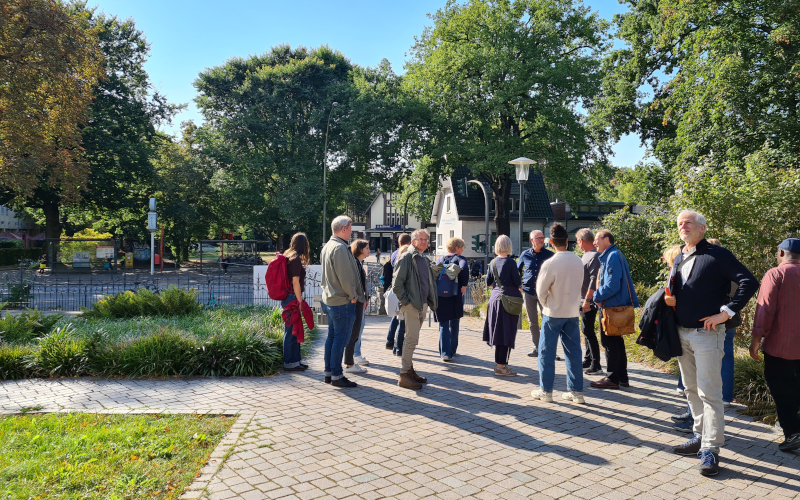
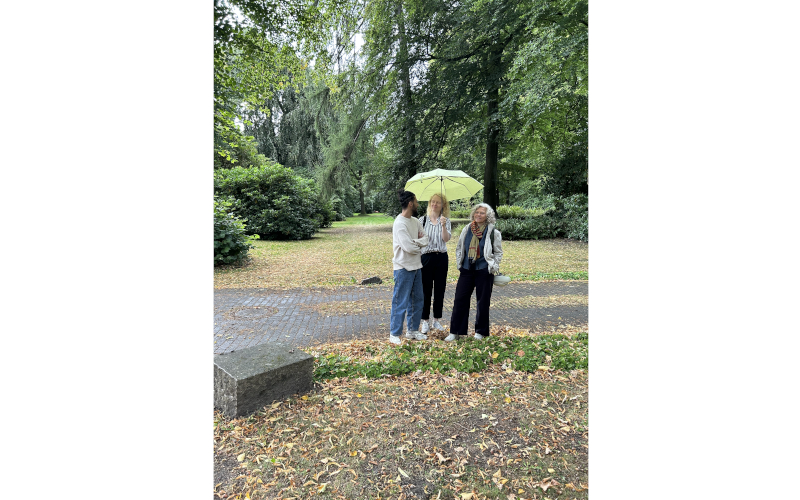
During a tour of the city centre, the approximately 25 colleagues were able to see this for themselves.
• © Feiler & König
• © Feiler & König
• © Feiler & König
• © Feiler & König
• © Feiler & König
• © Feiler & König
• © Feiler & König
• © Feiler & König
Only when introduced cautiously and in small doses do the ideas developed in the masterplan to open up the cemetery for other uses take hold. Can sections that are no longer required as burial grounds be leased to other users? Could clubs play boules here, and would collaboration with museums be conceivable to realise land art projects? What can the cemetery ‘cope with’ in terms of use? And isn’t a cemetery there not only for the dead, but also for the living? Can cemeteries of the future create new rituals; could it be ‘permitted’ for concerts to take place here?
The ‘Grüntöne 2025’ event drew to a close over soup and a drink. Many thanks to Jessica Uhrig, Bart Brands and Marc Templin for the excursion that took us beyond the everyday horizon and for the exciting thought experiments.
Kerstin König, Hamburg, 24 September 25
- Latitude: 0
- Longitude: 0