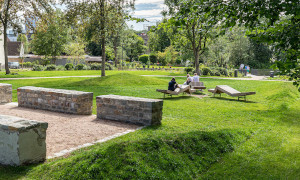
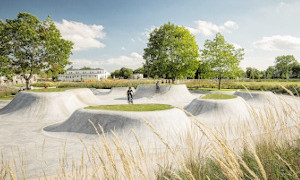
In October, the Central Germany 2025/26 Student Competition was launched in collaboration with the regional associations of Saxony, Saxony-Anhalt and Thuringia.
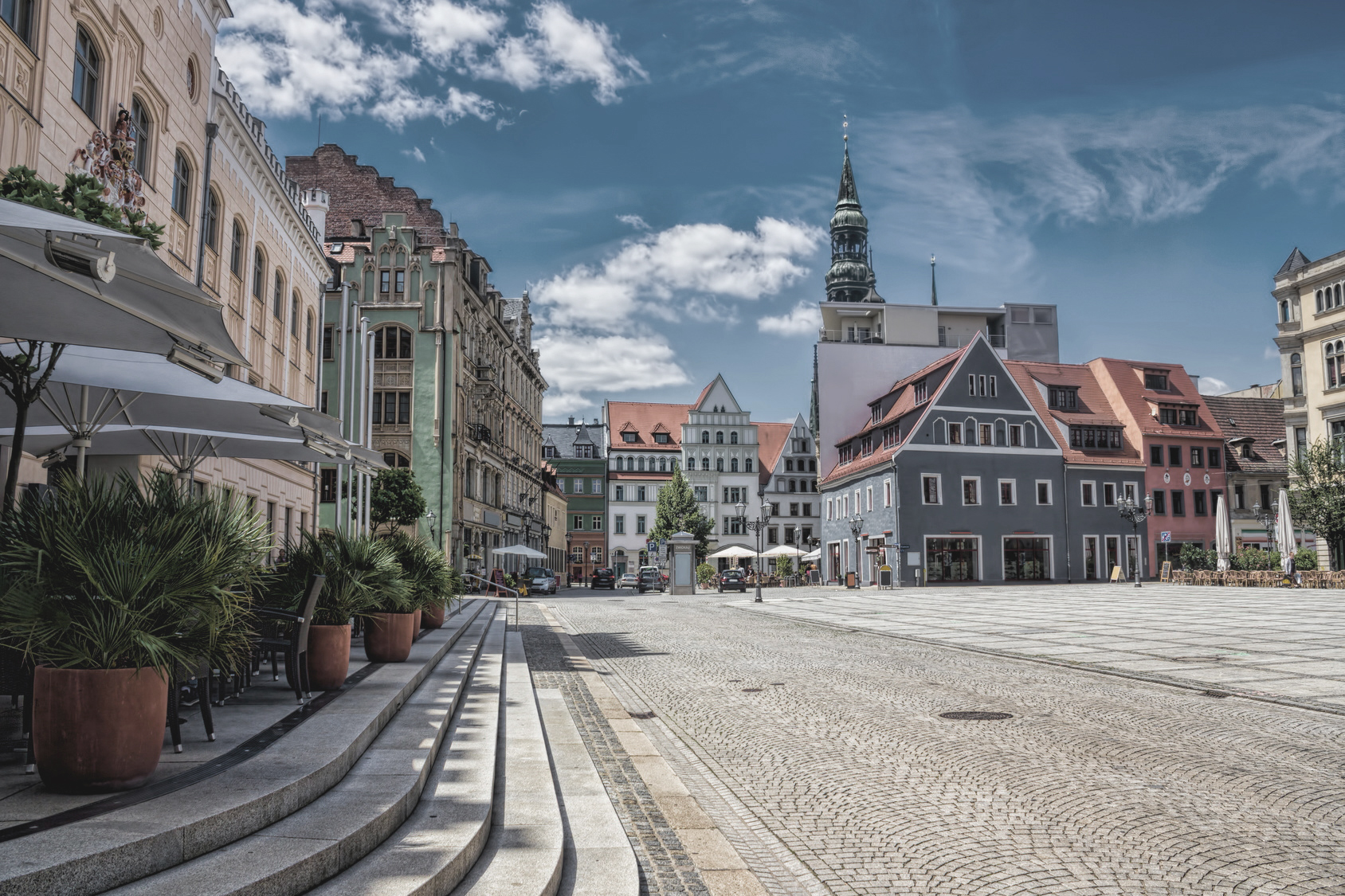
The theme of this year’s Central German Student Competition, ‘Zwickau – Connecting scapes and Beat the Heat’, takes on particular urgency in light of the climate crisis and its health implications. The title is intended as a call to actively develop strategies to effectively counter the growing strain on human and non-human beings caused by heat – particularly in urban areas.
The text ‘Health Under Stress’ accompanying the ‘Stress Test’ exhibition at the German Pavilion at the Venice Architecture Biennale makes it clear that extreme heat stress has long been a reality – with serious implications for public health. In the summer of 2022, over 61,000 additional heat-related deaths were recorded across Europe, more than 8,000 of them in Germany alone. Vulnerable groups such as older people, children, the sick, the homeless, and those living in poorly insulated homes or working outdoors are particularly at risk – a clear call to action! (See Bukert Pieske, ‘Gesundheit im Stresstest’, Stresstest, p. 102)
‘Zwickau – Connecting Scapes and Beat the Heat’ calls on students to devise creative, practical and social solutions for the open spaces in Zwickau city centre. The aim is to create a new network of green spaces with a view to adapting to climate change. To this end, the ‘Green Ring’ is being redesigned and supplemented by two green corridors: one running north to south along Hauptstraße, and the other east to west via a cross-connection from Schwanenteichpark to the River Mulde.
The aim is to use innovative designs to create urban spaces that reduce heat stress, enhance protection for vulnerable population groups and contribute to the climate-resilient development of our cities. The aim of the design is to create multi-coded urban spaces that, through adaptation to climate change, foster new qualities of living environments within a vibrant city centre. Measures to adapt to climate change are not merely a means to an end, but should be explicitly celebrated as an added value for the design of our city centres. The competition offers us the opportunity to play an active role in shaping healthy, equitable and sustainable living spaces.
The theme of this year’s Central German Student Competition, “Zwickau – Connecting Scapes and Beat the Heat”, takes on particular urgency in light of the climate crisis and its impacts on public health. The title is a call to action: to actively develop strategies that effectively address the growing stress placed on human and non-human life due to rising temperatures – especially in urban environments.
The essay “Health Under Stress”, published in the catalogue of the “Stress Test” exhibition at the German Pavilion of the Venice Architecture Biennale, highlights that exposure to extreme heat is already a reality – with serious consequences for public health. In the summer of 2022 alone, over 61,000 additional heat-related deaths were recorded across Europe, including more than 8,000 in Germany. Vulnerable groups such as the elderly, children, the sick, the homeless, and people living in poorly insulated homes or working outdoors are particularly at risk – an unmistakable call for action! (See: Bukert Pieske, “Gesundheit im Stresstest,” Stresstest, p. 102)
“Zwickau – Connecting Scapes and Beat the Heat” invites students to design creative, practical and socially inclusive solutions for the open spaces in Zwickau’s city centre. The aim is to establish a new network of green spaces as part of a broader strategy for climate adaptation. To this end, the existing green belt will be redeveloped and extended by two new green corridors: one running north–south along the main street, and one running east–west, linking Schwanenteich Park with the River Mulde.
Through innovative urban design proposals, the competition aims to create urban environments that reduce heat stress, protect vulnerable groups and contribute to the climate-resilient transformation of our cities. The proposed designs should create multi-functional urban spaces that both address climate challenges and enhance the quality of life in a vibrant city centre.
Crucially, climate adaptation measures are seen not only as a necessity, but as a design opportunity – an added value for reimagining and revitalising our city centres. This competition offers the chance to actively contribute to shaping healthy, just and future-ready living environments.
This student ideas competition is made possible and supported by FRÄNKISCHE Rohrwerke, the City of Zwickau and bdla Bund.


- Latitude: 0
- Longitude: 0